
Indication of a potential US Federal Reserve rate cut may trigger optimism in the domestic equity market, with investors' attention shifting to the looming deadline for additional US tariffs on Indian goods in a holiday-shortened week ahead, analysts said.

Stock investors will track the ongoing conflict between Iran and Israel, Brent crude oil prices, inflation data and the US Fed interest rate decision for further cues this week, analysts said. Tariff-related news would also dictate trends in the equity market, experts noted.

Gold prices are likely to remain under pressure in the coming week as investors await key US macroeconomic data for cues on the Federal Reserve's potential direction on interest rates, which in turn will influence the trajectory for the precious metal, according to analysts. Market sentiment has tilted away from safe-haven assets like gold amid fading geopolitical tensions and improving risk appetite towards riskier assets such as equities, they said.

New investors should not allow themselves to fall prey to FOMO and rush headlong into gold.

From the Sensex firms, Infosys, Tata Consultancy Services, HCL Tech, Tech Mahindra, Tata Motors, Sun Pharma, Maruti and Titan were among the major gainers. Bharat Electronics, Asian Paints, Bharti Airtel and ICICI Bank were among the laggards.

'These Marathas are farmers and they only do farming. They have no other business other than farming. Now, they want reservations because farming is no longer a profitable business.'In this interview, veteran farmers' rights advocate and founding member of the Shetkari Sanghatna, Vijay Jawandhia, with Syed Firdaus Ashraf/Rediff unpacks the historical and structural roots of the agitation.
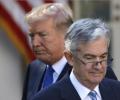
In a drastic measure to stem any major disruption to the US economy as a result of the coronavirus outbreak, the Federal Reserve has cut its benchmark interest rate to almost zero and said it would buy USD700 billion in bonds. The covid-19 pandemic has sickened more than 156,000 people worldwide and left more than 5,800 dead. The death toll in the US stands at 68, while infections neared 3,700.

Dr Ramakanta Panda's unique exhibition, titled Heartbeats -- Wildlife, Our Shared Future, features a compelling collection of over 200 photographs centred around the theme of wildlife conservation.

'The (Maoist) organisation is in visible decline. Their senior leaders are ageing. Forest life is unforgiving -- older leaders simply cannot cope physically.' 'Earlier, they attracted educated youth from cities. That stream has dried up. Today's recruits largely come from poor village backgrounds and lack ideological depth.'

Gold prices are expected to witness further consolidation in the coming week as investors brace for a slew of events, ranging from central bank meetings, including the US Federal Open Market Committee (FOMC) meeting's outcome, to global trade negotiations, analysts said.

Owing to uncertainties on higher inflation and muted growth in the United States (US), coupled with concerns around America's rising debt and tariffs imposed by President Donald Trump, the world's largest economy has become the epicentre of an unabated record rally in prices of precious metals.

Among Sensex firms, Bharat Electronics rose the most by 4.26 per cent. HCL Tech gained 2.57 per cent, Bajaj Finance by 2.19 per cent, TCS by 1.99 per cent, Tech Mahindra by 1.88 per cent and Infosys by 1.85 per cent. Gains in Axis Bank and State Bank of India also supported the rally. However, Mahindra & Mahindra emerged as the biggest loser, falling by 2.47 per cent. Maruti dropped 1.53 per cent and Tata Motors by nearly 1 per cent due to profit-taking. UltraTech, Eternal and Power Grid were also among the laggards.

Uncertainties over the impact of the United States' (US') tariffs on India, along with the ongoing transmission of past rate cuts, prompted the members of the Reserve Bank of India's Monetary Policy Committee (MPC) to maintain the status quo during the August meeting, the minutes showed. While some of the external members highlighted their concern over growth, the internal members cited the one-year headline inflation rate overshooting the 4 per cent target.


'The Fed rate will peak in the range of 5.1-5.3 per cent during the second quarter of CY23 and will most likely stay there for a while before rate cuts start in CY24.'
Fed rate hike 'makes sense,' says US reserve bank president.

The US Fed interest rate decision, inflation data and FIIs are the key factors that are expected to drive stock markets this week, analysts said. Global trends will also be tracked by investors for further cues, they added. "The Indian stock market's future trajectory will be influenced by a blend of global and domestic factors.
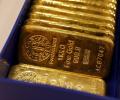
Gold prices advanced Rs 700 to reach a new lifetime high of Rs 91,950 per 10 grams in the national capital on Wednesday on the back of continued buying by jewellers ahead of wedding season, according to the All India Sarafa Association. Besides, increased tensions in the Middle East and concerns about the US economic slowdown have kept the demand for safe-haven assets intact.

The US Fed interest rate decision, trading activity of foreign investors and quarterly earnings from corporates would largely drive the momentum in the equity market this week, analysts said. Escalating tensions between India and Pakistan over the Pahalgam terror attack will also remain on investors' radar, they added.

The US Federal Reserve on Wednesday (local time) raised interest rates by 75 basis points (bps) or three-quarters of a percentage point in the boldest move since 1994.

The rupee has held its ground against the US dollar in the 2025 calendar year so far, but depreciated significantly against the euro and pound. It fell by 6.83 per cent, and 5.44 per cent against the euro and pound respectively, as the two currencies strengthened significantly against the greenback during the period.

'As long as Sebi maintains transparency and market stability, the Jane Street episode is unlikely to deter long-term foreign capital.'
From the Sensex pack, Bharti Airtel, Titan, Tata Consultancy Services, Hindustan Unilever, Infosys, Nestle, Reliance Industries, Mahindra & Mahindra, HDFC Bank and Tata Motors were the biggest gainers. However, IndusInd Bank, Bajaj Finance and UltraTech Cement were the laggards.

The first national flag in Independent India was hoisted at Fort St George in Madras, not at Delhi's Red Fort.

Gold prices rallied Rs 910 to hit a fresh all-time high of Rs 83,750 per 10 grams in the national capital on Wednesday due to heavy buying from jewellers and retailers, according to the All India Sarafa Association. The precious metal of 99.9 per cent purity had settled at Rs 82,840 per 10 grams in the previous trading session.

The US Federal Reserve's interest rate decision, global market trends and trading activity of foreign investors are the major factors that would dictate terms in the equity markets in a holiday-shortened week ahead, analysts said. Equity markets will remain closed on Tuesday on account of Ganesh Chaturthi. From the global front, interest rate decisions from the Bank of England and Bank of Japan would also influence market trends.

The market's sensitivity to the US Fed's balance sheet changes makes it vulnerable to the possible tapering of the bond buying programme and the resulting stagnation or even shrinkage in the balance sheet.

All sectoral indices ended lower. BSE Telecommunication tanked 2.18 per cent, metal (1.77 per cent), auto (1.70 per cent), energy (1.64 per cent), oil & gas (1.59 per cent), commodities (1.39 per cent) and financial services (1.37 per cent) were the major laggards.
'I don't see any major setback for the Indian markets post the US Fed event.'
Gold future prices sustained upward trend for the fourth straight session by surging Rs 2,048 to hit a fresh record high of Rs 100,000 per 10 grams as investors rushed to safe havens after US President Donald Trump indicated plans to overhaul Federal Reserve amid continuing global trade war jitters. On the Multi Commodity Exchange (MCX), the August delivery contract of the yellow metal bounced by Rs 2,048 or 2.1 per cent to hit a fresh peak of Rs 100,000 per 10 grams in the mid-session trade.

In the backdrop of an over four-decade high inflation, the US Federal Open Market Committee has raised its key policy interest rate by 75 basis points to 2.25-2.50 per cent, anticipating that the increase in the interest rates will be "appropriate". Hiking interest rates typically cool demand in the economy, thereby putting a brake on the inflation rate. The US Federal Reserve in its June meeting too raised the interest rate by 75 basis points, which was the steepest hike since 1994.

Gold prices rose by Rs 70 to hit yet another record high of Rs 98,170 per 10 grams in the national capital on Thursday amid firm global demand, according to the All India Sarafa Association. On Wednesday, the precious metal of 99.9 per cent purity soared by Rs 1,650 to hit an all-time high of Rs 98,100 per 10 grams.

'India is not so distant from years of high and entrenched inflationary expectations that it should start trying to play games with the economy the way the West's central bankers think they are entitled to,' argues Mihir S Sharma.

The equity benchmark indices posted their strongest weekly gains in years, driven by bargain hunting and optimism over a reversal in foreign portfolio investor (FPI) outflows. The Sensex rose 558 points, or 0.7 per cent, on Friday to close at 76,906, while the Nifty 50 gained 160 points to end at 23,350. Over the past five sessions, both indices advanced around 4.3 per cent - marking the Sensex's best weekly performance since July 22, 2022, and the Nifty 50's strongest rally since February 5, 2021.
The Reserve Bank of India's interest rate decision, macroeconomic data and global trends will drive investors' sentiment this week, with markets hoping to continue the positive momentum after ending FY24 on a buoyant note, analysts said. In addition, the trading activity of foreign investors, the rupee-dollar trend and the movement of global oil benchmark Brent crude would also influence trading in equity markets. The 30-share BSE Sensex climbed 14,659.83 points or 24.85 per cent in the 2023-24.

'They have no chance of winning if free and fair polls are conducted.'

'I was so full of josh, with all my friends cheering me on, I gave it everything from the get-go.' 'By nightfall, the pain had set in. My legs were aching, my back was on fire and I was in tears.' 'I turned to my mom and said, "I can't do this."'

'You've got to understand it is not easy to die by suicide.' 'People commit suicide only when they lose everything and find no other way to live.'
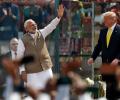
'It's important for India to think about areas where it wants the US to move.' 'We can be far more innovative in what we ask the US.' 'Given that there's a package deal, why not do it?'

The November 5 US presidential elections, Federal Reserve interest rate decision, trading activity of foreign investors, and the upcoming quarterly earnings from domestic firms are the major triggers that would influence sentiments in the equity market this week, analysts said. In an eventful week ahead, a host of macroeconomic data announcements and global trends would also drive the markets, experts said. "The upcoming week is poised to be eventful on the global front.
